



The Complete Guide to Choosing Your First Skateboard

Choosing your first skateboard can feel confusing when you’re new to the sport. Deck sizes, wheels, trucks, bearings, concave shapes — all these details matter for comfort, control, and how fast you learn. This guide breaks everything down in simple terms so you can pick the right setup with confidence.
1. Start With Your Riding Style
Before you choose parts, think about how you want to skate. Your style determines the shape, size, and components of your board.
Street Skating
Street skating includes tricks, stairs, rails, ledges, kickflips, and technical moves.
You’ll need a lighter, narrower deck and harder wheels for fast pop.
Park or Bowl Skating
Skating ramps and bowls requires more stability.
A slightly wider deck and medium wheels work well here.
Cruising or Transportation
If you mainly want smooth rides around town, choose a wider deck and softer wheels.
This gives you more comfort and grip.
Complete Skateboards vs Custom Builds
If it’s your first board, a complete skateboard is the easiest choice. Custom builds make sense once you know your preferences.
2. Choosing the Right Deck Size
The deck is the wooden board you stand on.
The width matters more than the length.
Recommended deck widths
-
Beginners: 7.75 – 8.25 inches
-
Street skating: 7.75 – 8.0 inches (more responsive for tricks)
-
Park / bowl skating: 8.0 – 8.5 inches (more stability)
-
Cruising: 8.5+ inches
If you're unsure, choose 8.0 inches. It offers a solid balance of stability and control for anyone starting out.
3. Deck Shape and Concave: What It Means
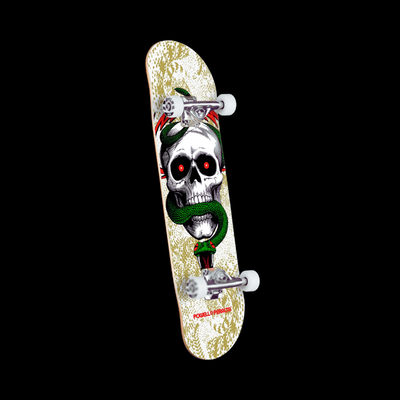
Popsicle Shape
The standard shape used for street and park skating. Good for learning everything.
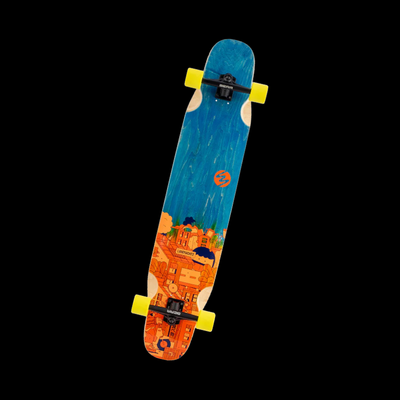
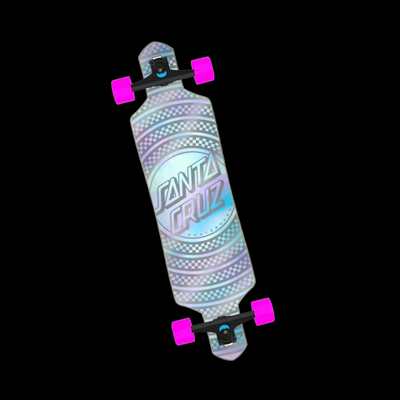
Cruiser Shapes
Rounded or directional designs for casual riding, not ideal for tricks.
Concave Levels
Concave refers to the curve of the deck.
-
Low concave: stable, comfortable
-
Medium concave: best all-around, easy to learn
-
High concave: more control for technical tricks
Beginners will feel most comfortable with medium concave.
4. Trucks: Why They Matter
Trucks are the metal parts that connect the wheels to the deck.
Truck width
Match truck width to deck width for balance and proper turning.
Truck height
-
Low trucks: better for small wheels and tricks
-
Mid trucks: best for beginners
-
High trucks: good for large wheels and cruising
Mid trucks paired with 52 mm wheels are an easy choice for new skaters.
5. Wheels: Stability or Speed?
Wheel size and hardness (durometer) impact how your skateboard feels.
Wheel size
-
50–52 mm: tricks, technical skating
-
52–54 mm: beginners and all-around use
-
55+ mm: cruising and rough surfaces
Wheel hardness
-
Soft wheels (90–97A): grippy and smooth, great for beginners
-
Hard wheels (99A+): fast and good for tricks
For your first board, 52–54 mm wheels with a medium hardness strike a nice balance.
6. Bearings: Speed and Smoothness
Bearings sit inside the wheels and affect how fast and smooth they spin.
ABEC ratings
-
ABEC-5: smooth and beginner-friendly
-
ABEC-7: faster, responsive
-
ABEC-9: high speed, for advanced riders
You don't need the highest rating as a beginner. ABEC-5 or ABEC-7 works well.
7. Complete Skateboard vs Building Your Own Setup
Complete Skateboard
A complete comes fully assembled.
Best for beginners because:
-
It’s balanced
-
Less expensive
-
No need to choose every single part
-
Ready to ride immediately
Custom Setup
Building a board from a deck and parts gives you control over every component.
Better for skaters who already know their preferences.
If this is your first skateboard, a complete model is the easiest starting point.
8. How to Check if Your Skateboard Is Safe
Before riding, do a quick safety check:
-
Make sure all hardware is tight.
-
Press down on the deck to test truck responsiveness.
-
Spin the wheels to ensure smooth rotation.
-
Look for cracks or delamination on the deck.
-
Stand on the board to test balance.
-
Do a short roll on a flat surface to confirm stability.
If the board feels even and rolls smoothly, you’re set.
FAQ: Choosing Your First Skateboard
What’s the difference between a complete skateboard and building one from a deck and parts?
A complete skateboard is ready to ride and more affordable, ideal for beginners. A custom build lets you choose every component but requires more knowledge and usually costs more.
What deck size is best for beginners or street skating?
Beginners: 7.75–8.25 inches.
Street skating: 7.75–8.0 inches.
An 8.0-inch deck is a versatile starting point.
Which bearings, wheels, and trucks are better for stability vs tricks?
-
Stability: softer wheels, wider trucks, ABEC-5 or ABEC-7 bearings.
-
Tricks: smaller, harder wheels, standard-width lightweight trucks, faster bearings.
Should I buy a complete skateboard from SkatesUSA or customize my own setup?
Buy a complete if you’re new. Customize if you already skate and want specific features.
How do I check if a skateboard is balanced and safe before riding?
Check hardware tightness, smooth wheel spin, deck condition, and overall responsiveness. Do a short roll test to confirm stability.
