

Longboard vs. Cruiser vs. Street Skateboard: Finding Your Perfect Ride
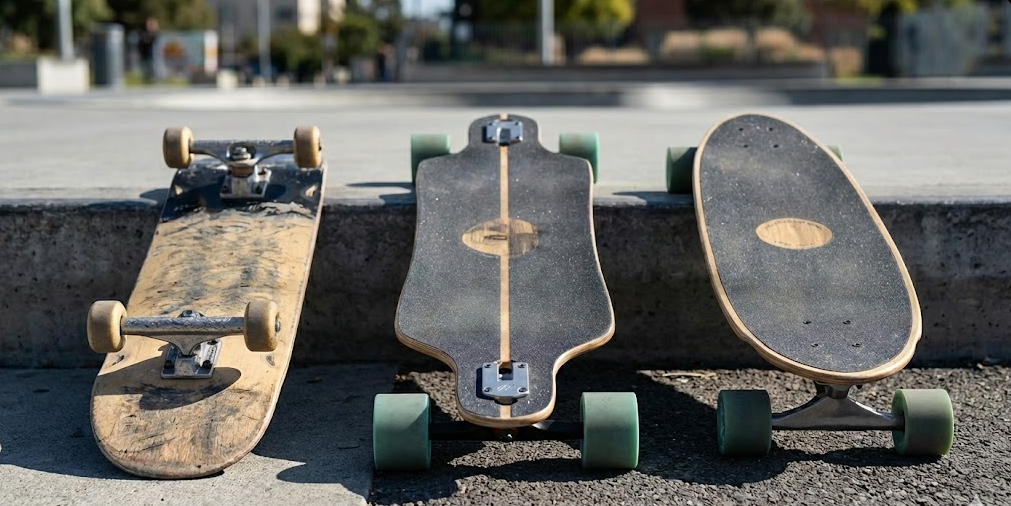
So, you want to start skating. You log onto Skates USA, ready to buy your first setup, and suddenly you’re staring at hundreds of options. Some are tiny and shaped like fish; some are massive drop-throughs nearly four feet long; others are the classic "popsicle" shape you see in the X Games.
It can be overwhelming. If you buy the wrong type of board for the riding you want to do, you’re going to get frustrated fast.
At Skates USA, we’ve been outfitting riders since 1995. We know that the "best" board isn't the most expensive one; it's the one tailored to how and where you want to ride.
This guide breaks down the three main categories street skateboards, longboards, and cruisers so you can stop guessing and start rolling.
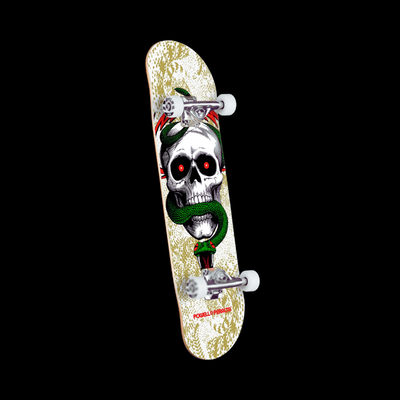
1. The Street Skateboard: The Trick Machine
This is what most people picture when they hear the word "skateboard." It is the standard, versatile design used by pros in street leagues and skateparks globally.
The Setup:
-
Deck: Usually the classic "popsicle" shape symmetrical with a kicktail on both the nose and tail.
-
Wheels: Small and very hard.
-
Trucks: Durable and designed for grinding on rails and ledges.
What it’s built for: Tricks. Every aspect of this board is designed to be popped into the air, flipped, and landed on concrete. The hard wheels slide easily, which is crucial for technical tricks, and the symmetrical shape means it rides the same backward or forward.
The Drawbacks: It is terrible for commuting on rough pavement. Those small, hard wheels feel every single pebble in the road, making for a loud, vibrating, and slow ride on anything other than smooth concrete.
Choose this if: Your main goal is learning ollies, kickflips, grinding rails, or riding skatepark bowls.
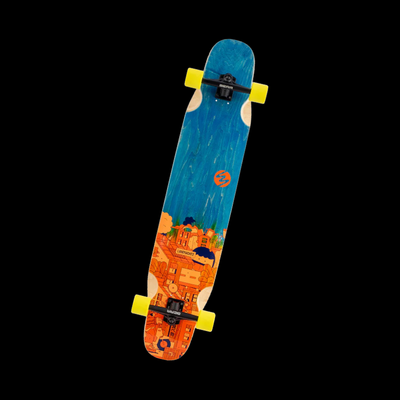
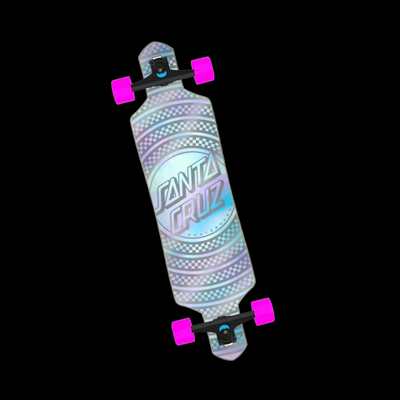
2. The Longboard: The Smooth Distance Roller
If the street skateboard is a twitchy sports car, the longboard is a Cadillac. They are designed for stability, speed, and comfortable cruising over long distances.
The Setup:
-
Deck: Much longer and wider than a street board. Shapes vary wildly (pintails, drop-throughs, dancers).
-
Wheels: Large, wide, and soft.
-
Trucks: Wider and often featuring "reverse kingpin" geometry, which allows for deeper, smoother turning carves.
What it’s built for: Flow. Longboards excel at cruising beach boardwalks, commuting long distances across campus, "dancing" on the deck, or bombing hills at high speeds (downhill). The big, soft wheels absorb cracks and rocks that would stop a street board dead in its tracks.
The Drawbacks: They are heavy and bulky. You won't be ollieing up curbs with a 40-inch longboard. They are also harder to carry around when you aren't riding.
Choose this if: You want a smooth, surf-like ride for commuting distances over a mile, getting down big hills, or just relaxed cruising without worrying about tricks.
3. The Cruiser: The Best of Both Worlds
Cruisers are the hybrids of the skate world. They are the ultimate "point A to point B" vehicles for city dwellers and students.
The Setup:
-
Deck: Shorter than a longboard (often similar length to a street board), but usually shaped with a pointed nose and a usable kicktail. They often resemble 1980s-style pool boards.
-
Wheels: Soft like a longboard, but usually mid-sized.
-
Trucks: Varies, but usually standard street trucks but wider for stability.
What it’s built for: Urban transport. They are small enough to strap to a backpack, shove in a locker, or carry onto a bus. Crucially, they have soft wheels that handle rough city asphalt quietly and smoothly.
Q: Can you do tricks on a cruiser board? A: Yes, but it’s harder. Because they usually have a kicktail, you can ollie up a curb or do basic manuals. However, the soft wheels are too bouncy for technical street tricks, and the shaped decks make flip tricks difficult.
Choose this if: You need to commute short distances (under a mile) over rough pavement, but you need something portable enough to carry into a store or classroom.
Summary: The Critical Factor – Wheels
Often, the biggest difference in how a board feels under your feet comes down to the wheels.
The "Smooth Ride" Secret: If your roads are rough, you need soft wheels. Wheel hardness is measured by "Durometer" (usually an 'a' number).
-
99a - 101a (Hard): Found on street boards. Great for skateparks and sliding. Loud and bumpy on the street.
-
78a - 87a (Soft): Found on longboards and cruisers. Grippy, quiet, and rolls right over pebbles and cracks like they aren't even there.
The Final Verdict
Don't stress too much about the decision. Many skaters eventually own one of each!
Ask yourself: "Where will I spend 80% of my time riding?"
If the answer is the skatepark, get a street complete. If the answer is the beach path, get a longboard. If the answer is getting from your dorm to the dining hall, grab a cruiser.
No matter what you choose, Skates USA offers free shipping on orders over $50 to get you rolling fast.
