

Sizing Guide: Finding the Right Helmet Shape (Oval vs. Round)
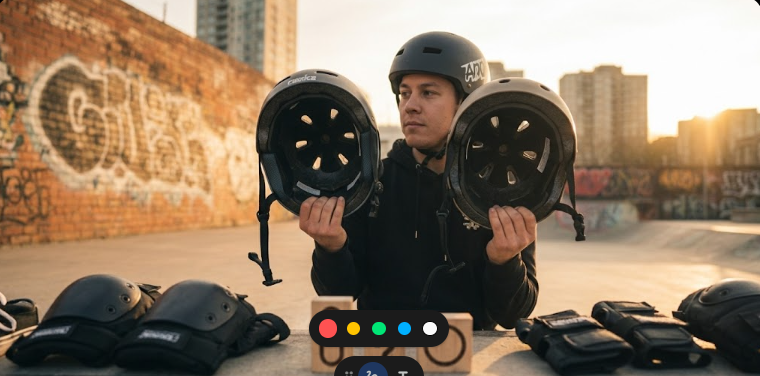
Buying a helmet is arguably the most important purchase any skater, cyclist, or scooter rider will make. You navigate to a collection, find a brand you love, like Triple Eight, S-One, or Pro-Tec, and check the size chart. You measure your head, it says "Medium," you order a Medium, and yet, when it arrives, it’s uncomfortable. Maybe it pinches your forehead, or perhaps there’s a strange gap at the temples.
Why? Because size is only half the battle. Shape is the other half.
At SkatesUSA, we want to ensure you are protected and comfortable. A helmet that doesn't fit properly isn't just annoying; it’s a safety hazard. This guide will help you understand the psychology of head shapes and how to choose between the industry’s leading brands to find your perfect fit.
1. The Anatomy of Head Shapes: Oval vs. Round
Most people assume their heads are relatively spherical. In reality, human heads generally fall into two distinct categories when viewed from above: Long Oval and Round Oval.
The Long Oval Head Shape
A Long Oval head is significantly longer from the forehead to the back of the skull than it is wide from ear to ear.
-
The Problem: If you have a Long Oval head and buy a Round helmet, you’ll feel "hot spots" or painful pressure on your forehead and the back of your head, while the sides feel loose.
The Round Oval Head Shape
A Round Oval head is more symmetrical. The width from side to side is nearly equal to the length from front to back.
-
The Problem: If you have a Round head and buy a Long Oval helmet, you’ll feel "temple pinch." The helmet will feel tight on the sides of your head, but you’ll likely be able to fit your fingers between the helmet and your forehead.
2. Brand Deep Dive: Which One Fits You?
Not all brands use the same mold. Based on the products we carry, here is how the "Big Three" typically fit:
S-One (S1): The King of the Long Oval
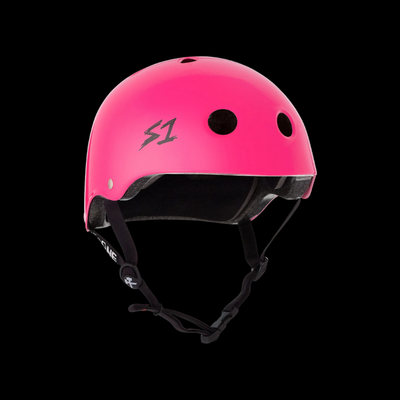
The S1 Lifer series is legendary for its protection, but it’s specifically engineered with a slightly elongated internal shape.
-
Best for: Skaters who often find helmets "pushing" on their forehead.
-
The Tech: S1 uses a high-impact EPS fusion foam. Because the shell is deep and slightly narrow, it provides a "low profile" look that sits deep on the head without making you look like a mushroom.
Triple Eight: The Versatile "Intermediate" Fit
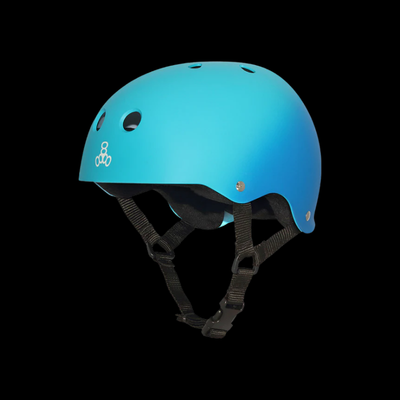
Triple Eight, particularly the Sweatsaver and Certified Sweatsaver lines, tends to lean toward a more neutral, "Intermediate Oval" to "Round" shape.
-
Best for: Most skaters. It’s the middle ground.
-
The Tech: The famous Sweatsaver liner is thick and plush. This "squishy" factor allows the helmet to accommodate minor shape discrepancies by compressing where your head is wider.
Pro-Tec: The Classic Round Fit
Pro-Tec is the original. Their Classic Certified helmets have a timeless, spherical internal mold that has remained largely consistent for decades.
-
Best for: Riders with wider or more "square" head shapes.
-
The Tech: Pro-Tec often uses a slightly wider shell design. If you find that S1 or Triple Eight feels too "tight" on the sides of your head, Pro-Tec is usually the solution.
3. The "Two-Finger" Safety Test
Once you’ve chosen a brand based on your shape, you need to verify the fit. A helmet that "fits" on paper but isn't worn correctly won't protect you in a fall.
-
The Level Test: The helmet should sit level on your head, covering the top of your forehead. It should sit about two finger-widths above your eyebrows.
-
The Shake Test: Put the helmet on and shake your head "no" vigorously. If the helmet shifts or slides, it’s too big or the shape is wrong.
-
The Y-Strap: The straps should form a "V" or "Y" shape just below your earlobes.
-
The Mouth Test: When you open your mouth wide, the helmet should pull down slightly on your head. If it doesn't, tighten the chin strap.
4. Fine-Tuning with Fit-Pads
What if you are right in between shapes? This is where Fit-Pads come in.
Most high-end helmets, like those found in the Triple 8 collection or the S1 Lifer series, come with (or offer) different thicknesses of internal foam pads. These aren't just for comfort—they are structural tools.
-
Customizing for Oval Heads: If you have a Long Oval head in a neutral helmet, you can use thinner pads in the front and back and thicker pads on the sides to fill the gaps at the temples.
-
Customizing for Round Heads: Use thicker pads in the front and back to prevent the "rocking" motion that happens when a helmet is too long for your skull.
Pro-Tip: Never mix and match pads from different brands. Each pad is designed for the specific density and safety ratings of its respective shell.
5. Safety First: The "One Hit" Rule
Regardless of whether you choose a Triple 8, S-One, or Pro-Tec helmet, you must understand the difference between Certified and Non-Certified models.
-
Certified (EPS Foam): These helmets are designed to handle a single, high-impact crash. The hard foam cracks to absorb the energy. Once it cracks, the helmet is "dead" and must be replaced.
-
Non-Certified (Soft Foam): These are meant for low-impact, multiple bumps (common in vert skating). They are often more comfortable because the foam is soft, but they do not provide the same level of protection against concussions or skull fractures.
Conclusion: Stop Guessing, Start Measuring
Returns are a hassle for you and for us, but more importantly, a poorly fitted helmet leaves you vulnerable. Before you hit "Add to Cart":
-
Measure your circumference with a soft tape measure.
-
Identify your shape (Look in the mirror from above!).
-
Select your brand: Choose S1 for Long Oval, Pro-Tec for Round, or Triple 8 for a Neutral/Intermediate fit.
-
Fine-tune with fit-pads once it arrives.
A helmet should feel like a firm hug, not a vice grip. When you find the right shape, you’ll forget you’re even wearing it—allowing you to focus on the ride, not the pinch.
Frequently Asked Questions
1. I measured my head, and I’m between sizes. Should I size up or down? If you are between sizes, we generally recommend sizing up and using thicker Fit-Pads to snug up the fit. A helmet that is too small will create painful pressure points and won't sit deep enough on your head to protect your temples and the back of your skull. By sizing up, you can customize the internal shape using the pads provided in kits from brands like S-One or Triple Eight.
2. How do I know if my current helmet is a "Round" or "Long Oval" shape? The easiest way to tell is by looking for "gaps" or "pressure." If your helmet feels tight on your forehead but has space near your ears, it is likely a Round mold being worn on a Long Oval head. Conversely, if it pinches your temples but you can wiggle your fingers behind the forehead padding, it is a Long Oval mold being worn on a Round head. For a classic round fit, check out the Pro-Tec collection.
3. Can I use the fit-pads from my old Triple 8 helmet in my new S-One Lifer? No. You should never mix and match pads between different brands. Manufacturers design their pads to work specifically with the density of their own EPS foam or shells. Using mismatched pads can compromise the helmet's ability to stay secure during an impact, potentially affecting your safety. Always use the brand-specific replacement pads designed for your model.
4. Does the shape of the helmet affect its safety rating? The shape itself doesn't change the safety rating, but the fit does. A "Certified" helmet from Pro-Tec and one from S-One may both meet CPSC safety standards, but if the shape causes the helmet to sit too high on your forehead or tilt backward, it cannot protect you as intended. Safety is a combination of a high-quality certified shell and a proper, level fit on your specific head shape.
)