


Skateboard Bearings Explained: Sizes, ABEC Ratings & How to Choose
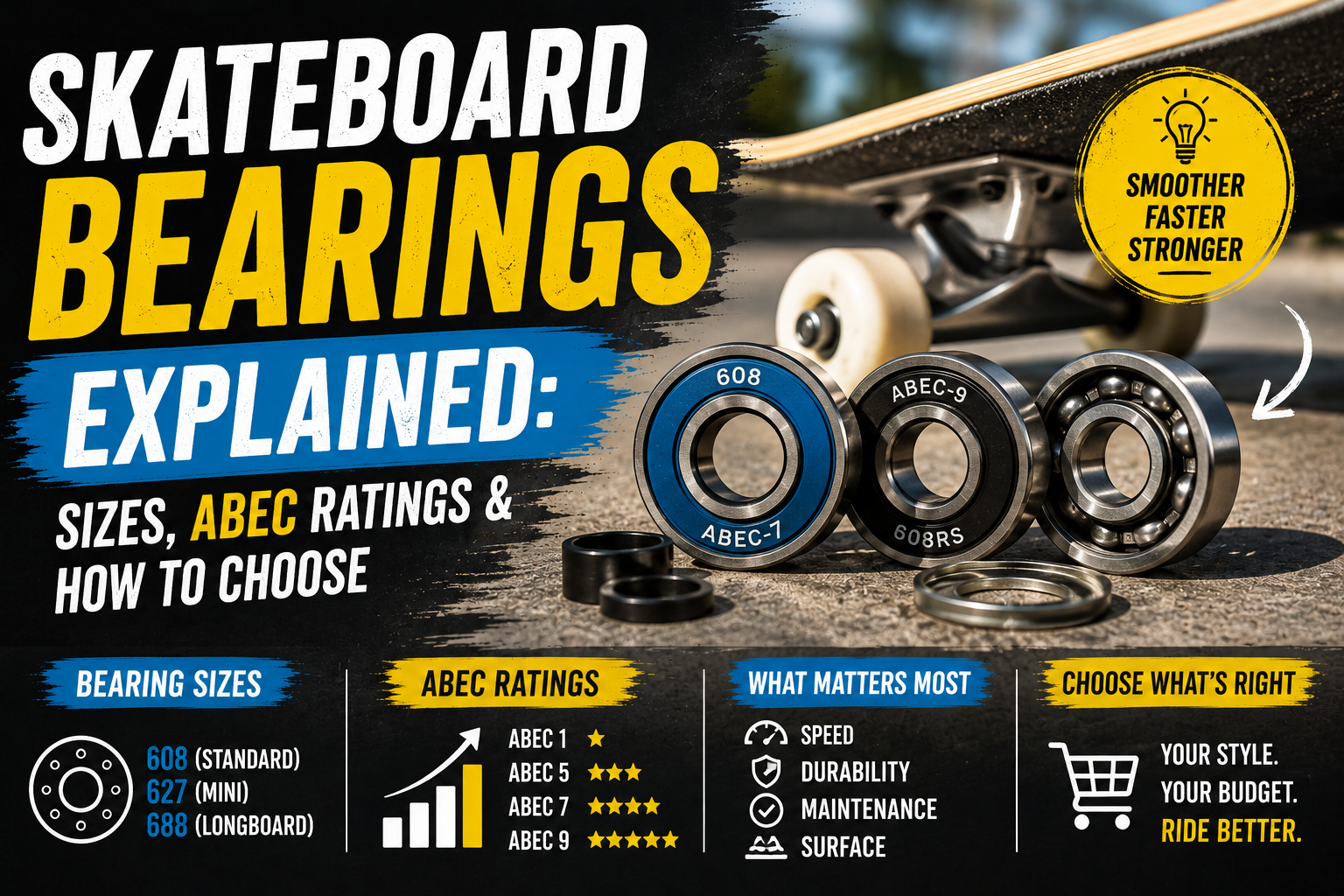
When you roll down the street or drop into a bowl, your wheels get all the attention, but it’s the small set of steel or ceramic rings inside them that does the heavy lifting. Selecting the right bearings on skateboard setups can mean the difference between effortless, high-speed carving and endlessly pushing just to keep your momentum going.
With so many brands, materials, and rating systems available today, picking the ideal set can quickly feel overwhelming. Whether you are assembling your first setup, upgrading your street rig, or searching for the best longboard bearings for downhill cruising, this guide breaks down everything you need to know about skateboard bearing dimensions, ABEC ratings, top industry brands, and how to choose the right pair for your riding style.
What Are Skateboard Bearings and How Do They Work?
Skateboard bearings are small circular metal rings that fit inside each of your four wheels. Every skateboard wheel requires two bearings, meaning a complete setup utilizes eight bearings in total (two per wheel, mounted onto the axles of your trucks).
A standard skateboard bearing consists of seven key components:
-
Outer Ring (Race): The exterior steel casing that sits flush against the core of the wheel.
-
Inner Ring (Race): The smaller interior ring that slides directly onto your truck’s axle.
-
Steel or Ceramic Balls: The small spheres (usually 7 per bearing) that roll between the inner and outer races, allowing the wheel to rotate smoothly.
-
Ball Cage (Retainer): A nylon or metal structure that keeps the individual balls spaced evenly apart.
-
Shield: A removable rubber, metal, or plastic cover designed to keep dirt, water, and debris out while keeping lubrication inside.
-
C-Ring: A tiny snap ring that locks removable shields in place.
-
Lubricant: Either high-speed oil or synthetic grease that reduces friction and protects the internal components from friction heat.
Skateboard Bearing Size: Standard Dimensions Explained
Unlike deck widths or wheel diameters, which vary widely depending on personal preference, skateboard bearing size is standardized across the entire skateboarding industry.
Nearly every standard skateboard, longboard, cruiser, and roller skate uses 608 industrial-size bearings.
Standard Skateboard Bearing Dimensions
If you measure a standard 608 bearing, you will find the following skateboard bearing dimensions:
-
Outer Diameter: 22mm
-
Inner Core (Axle Bore): 8mm
-
Width/Thickness: 7mm
Because 608 is the universal standard, you don't need to worry about buying specific bearings for specific wheel brands. Any 608 bearing will fit into standard skateboard trucks and skateboard wheels without issue.
Pro Tip: While 8mm axles are standard, some specialized downhill longboards or vintage setups use 10mm axles. Double-check your truck specifications if you ride non-standard equipment, but for 99% of skaters, 8mm (608) bearings are what you need.
Decoding ABEC Ratings: Do They Really Matter?
When shopping for skateboarding bearings, you will frequently encounter the term ABEC rating (ABEC 1, 3, 5, 7, or 9).
ABEC stands for the Annular Bearing Engineers' Committee, a system designed to measure the manufacturing tolerance and precision of industrial bearings. A higher ABEC number indicates tighter tolerances and greater mechanical precision.
The ABEC Myth in Skateboarding
It is a common misconception that a higher ABEC rating automatically means a faster skateboard.
The ABEC system was originally engineered for industrial machinery operating at tens of thousands of RPMs (revolutions per minute) under controlled indoor conditions. On a skateboard, an average rider traveling at 10 to 15 mph only turns their wheels at around 1,500 to 2,000 RPM.
At these speeds, the precision differences measured by the ABEC scale are virtually unnoticeable. Furthermore, the ABEC rating does not account for critical skateboarding factors such as:
-
Impact resistance against high stair jumps or harsh drops.
-
Lateral loads created during slides and sharp turns.
-
Shield quality and dust protection.
-
Lubricants suited for street environments.
This is why many of the top core skate brands, including market leaders like Bones Bearings, do not use the ABEC rating system at all. Instead, they engineer their products specifically for the high-impact, dirty environments of skateboarding.
Steel vs. Ceramic Bearings: Which Is Better?
When deciding what good bearings for skateboards are, material choice plays a massive role in performance, lifespan, and price point.
1. Steel Bearings
Steel is the most popular and affordable material used in skateboard bearings. High-grade chrome steel provides fantastic speed, durability, and shock absorption for everyday street, park, and ramp riding.
-
Pros: Highly durable, affordable, widely available.
-
Cons: Susceptible to rust if exposed to water or moisture; requires regular cleaning.
2. Ceramic Bearings
For high-performance enthusiasts, Bones ceramic bearings and other ceramic options represent the pinnacle of speed and engineering. Ceramic bearings feature silicon nitride balls enclosed in steel races.
-
Pros:
-
Lighter and Harder: Ceramic balls are significantly lighter than steel, allowing faster acceleration.
-
Self-Healing Properties: Because ceramic is harder than steel, if dirt enters the bearing, the ceramic ball actually polishes out minor scratches on the steel race as it spins.
-
No Rusting: Ceramic balls will never rust or corrode, extending the overall life of the bearing.
-
Less Friction: Requires less maintenance and less oil, offering an exceptionally smooth spin.
-
Cons: Considerably higher price point than standard steel bearings.
Top Skateboard Bearing Brands to Consider
If you want reliable performance out of the box, sticking with proven skateboard hardware manufacturers is always the smartest move. When building or upgrading your setup, check out these industry-leading brands available in our complete skateboard bearings collection.
Bones Bearings
Bones has been the undisputed industry benchmark for over four decades. Designed from the ground up for skating rather than standard industrial applications, Bones products are legendary for speed and long-term durability.
-
Bones Reds: The single best-selling bearing in skateboarding history. Bearings Reds deliver premium speed, dual rubber shields for quick cleaning, and high reliability at an entry-level price point.
-
Bones Swiss: The gold standard for professional skaters worldwide. Bearings Bones Swiss feature Swiss precision manufacturing, offering unmatched speed, smoother roll, and long-lasting strength under intense impact.
-
Bones Super Swiss 6: Utilizes six larger-diameter balls instead of seven standard balls, offering higher top speeds and greater resistance to dirt buildup.
Bronson Speed Co.
Engineered for modern, high-impact street and transition riding, Bronson Speed Co. produces "next-generation" bearings specifically tuned to eliminate friction and resist high impact.
-
Bronson G2 & G3: Feature deep-groove raceways, straight-edge frictionless shields, and micro-groove raceway surfaces that distribute lubricant continuously.
-
Bronson Ceramic: Designed for extreme speed, moisture resistance, and high-velocity longboard downhill racing.
How to Choose the Right Bearings for Your Riding Style
To pick the perfect set of bearings for your setup, match your choice to your budget and primary style of skating:
-
Street & Park Beginners: If you are building your first complete or need a budget-friendly upgrade, reliable options like Bones Reds or Bronson G2 offer unbeatable value and smooth performance without breaking the bank.
-
Intermediate to Advanced Street Skaters: If you hit high stair sets, rails, or fast park bowls daily, look into Bronson G3 or Bones Super REDS for enhanced impact resistance and faster roll speed.
-
Cruisers & Downhill Longboarders: If your focus is maintaining speed over long distances or downhill racing, invest in premium precision steel options like Bones Swiss or lightweight Bones Ceramic bearings. They maintain momentum longer with minimal pushing.
Maintenance Tips: Keeping Your Bearings Fast
Even the highest-end bearings will slow down if clogged with dirt, sand, and moisture. Follow these simple care tips to extend the lifespan of your gear:
-
Avoid Water: Water is the primary enemy of steel bearings. Never skate through puddles or rain, as rust can destroy your races overnight.
-
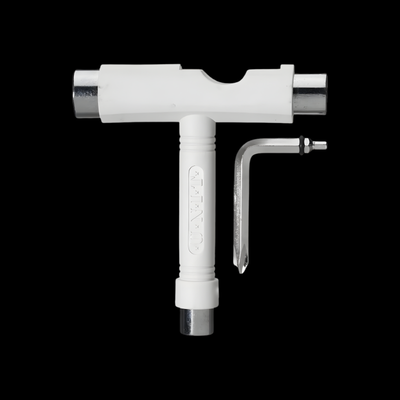
Use Proper Tools: When swapping bearings or adjusting your axle nuts, use specialized skate tools to avoid stripping axle threads or damaging the bearing shields.
-
Clean Regularly: When your wheels stop spinning freely, pop off the rubber shields, clean out grit with a bearing cleaning solvent, dry thoroughly, and apply two drops of specialized skate lubricant or speed cream. Never use WD-40, as it strips essential lubricants and attracts dirt.
