





Longboard vs. Skateboard vs. Cruiser: Which Should You Ride?
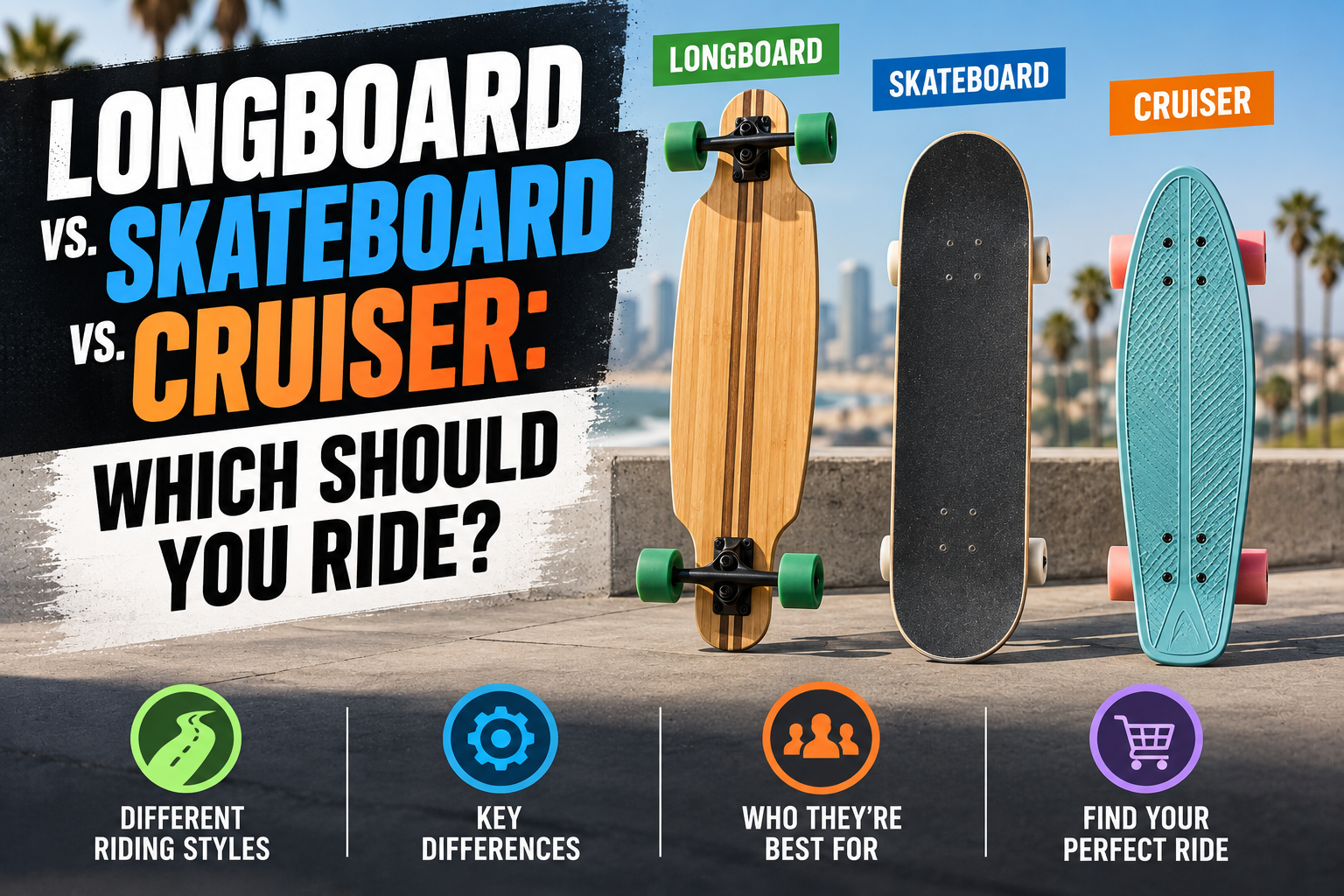
If you are looking to get into board sports this year, you are picking the perfect time. The skating community is more vibrant and welcoming than ever before. But before you can hit the local skatepark, cruise the boardwalk, or carve down your neighborhood hills, you are faced with a classic dilemma: longboard vs. skateboard vs. cruiser. Which one is right for you?
This debate has been going on for decades. Some skaters swear by the classic double-kick pop of standard skateboards, while others crave the smooth, surfy flow of a longboard or the compact convenience of a cruiser. Whether you are a total beginner trying to pick your first setup or an experienced rider looking to switch up your style, understanding the key differences is the key to having a blast on concrete.
In this comprehensive guide, we are breaking down everything you need to know about longboards, skateboards, and cruisers. From board dimensions and wheel formulas to budget requirements and riding styles, we’ll help you figure out the ultimate board for your lifestyle.
What Is a Traditional Skateboard?
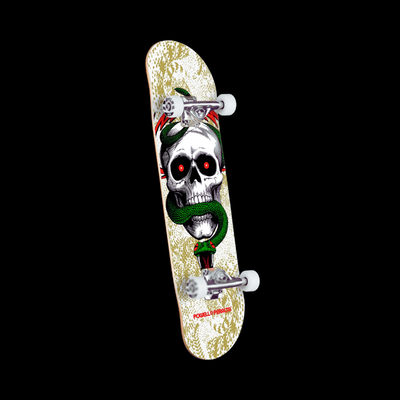
When most people picture street skating, X Games competitions, or flip tricks, they are picturing a classic skateboard. Featuring a symmetrical "popsicle-shaped" deck with a distinct nose and tail, traditional skateboards are built specifically for technical tricks, street obstacles, and transition riding.
They utilize small, hard polyurethane wheels (typically 50mm to 54mm) mounted on narrow, rigid trucks. This setup provides maximum pop and quick response on smooth concrete and wood ramps.
Pros of Skateboards:
-
Trick Capability: Unmatched for kickflips, grinds, manual tricks, and street skating.
-
Park Dominance: Perfect for bowls, halfpipes, ledges, and rails.
-
Durability: Built with stiff, high-grade maple to absorb heavy impacts.
Cons of Skateboards:
-
Rough Ride: Small, hard wheels transfer every vibration directly into your feet and snag easily on pebbles or cracks.
-
Lower Top Speed: Less efficient for long-distance commuting or effortless gliding.
If you are eager to learn technical tricks or hit the ramps, explore our wide range of complete skateboards.
What Is a Longboard?
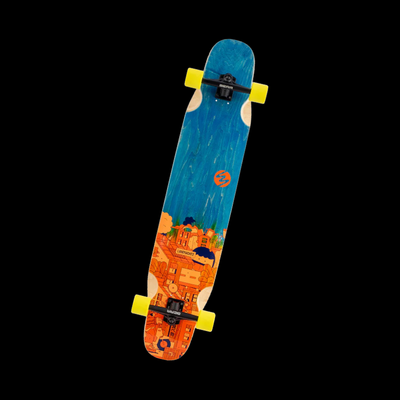
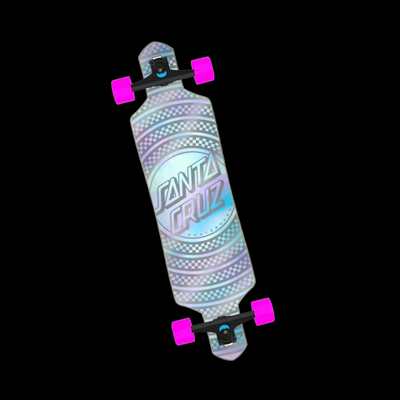
As the name suggests, longboards feature significantly longer decks—typically ranging from 36 inches to over 40 inches in length. Designed with wider wheelbases, drop-through or top-mount trucks, and large, soft wheels (65mm to 75mm+), longboards prioritize stability, smooth rolling, and effortless carving.
Longboarding is heavily inspired by surfing, offering a fluid, gliding sensation that makes covering long distances feel completely effortless.
Pros of Longboards:
-
Maximum Stability: The wide wheelbase and low center of gravity make high speeds and steep hills manageable.
-
Ultra-Smooth Glide: Large, soft wheels easily roll over pebbles, cracks, and rough asphalt.
-
Easy Learning Curve: Excellent balance platform for absolute beginners.
Cons of Longboards:
-
Portability: Large, heavy decks are awkward to carry through crowded spaces or store in small places.
-
Limited Trick Variety: Too heavy and long for traditional street tricks like kickflips or nosegrinds.
Ready to experience a smooth, surfy ride? Check out our extensive collection of complete longboards, including industry-leading setups like Landyachtz longboards.
What Is a Cruiser Board?
Cruiser boards bridge the gap between traditional skateboards and longboards. They take the compact, portable size of a street skateboard and pair it with the large, soft wheels of a longboard. Cruisers often feature vintage-inspired directional shapes, functional kicktails, and medium-length decks (typically 28 to 33 inches).
If your primary goal is commuting to school or work, zipping around town, or cruising down to the beach, a cruiser offers the ideal balance of maneuverability and comfort.
Pros of Cruisers:
-
High Portability: Light and compact enough to strap onto a backpack or stow under a desk.
-
Smooth & Agile: Soft wheels absorb street vibrations while the shorter wheelbase allows tight turns.
-
Fun & Versatile: The functional kicktail lets you pop up curbs while enjoying a comfortable ride.
Cons of Cruisers:
-
High-Speed Instability: Shorter wheelbases can experience speed wobbles on steep downhill runs.
-
Not Ideal for Technical Tricks: While nimble, they are not designed for repetitive street or park grinds.
For the ultimate daily commuter board, take a look at our curated selection of complete cruisers and eco-friendly Arbor skateboards.
Key Differences: How They Compare
When choosing your ideal setup, comparing key performance factors helps narrow down the right board for your needs.
1. Speed, Fitness, and Commuting
If you want to travel around town or commute long distances:
-
Longboards offer the smoothest ride over long distances with minimal pushing required.
-
Cruisers excel for short urban commutes where you need to weave through foot traffic and carry your board indoors.
-
Skateboards require continuous pushing and are tiring on rough streets.
2. Tricks and Skateparks
-
Skateboards are the top choice for street tricks, ledges, and skatepark ramps.
-
Cruisers allow basic trick functionality like popping over curbs or kickturns.
-
Longboards excel in unique disciplines like freestyle dancing, board walking, and downhill sliding rather than street tricks.
3. Stability vs. Maneuverability
-
Longboards offer maximum stability at high speeds.
-
Cruisers offer high maneuverability for tight urban turning.
-
Skateboards offer precise control for technical maneuvers.
How Much Does a Skateboard Cost? (Cost Breakdown)
A common question for new riders is: how much does a skateboard cost compared to a longboard or cruiser? Understanding setup pricing helps you set a realistic budget for a quality complete board.
When evaluating how much skateboards cost, costs generally depend on component quality, brand, and board type:
-
Entry-Level Completes ($50 – $90): Good for young beginners testing out the sport.
-
Mid-Range / Quality Completes ($90 – $150): The sweet spot for beginners and intermediate riders asking how much a good skateboard costs. Boards in this range feature 7-ply maple, durable trucks, and fast bearings.
-
Pro-Level & Specialized Longboards ($150 – $250+): Premium setups like Landyachtz longboards or Arbor cruisers often fall here due to specialized manufacturing, drop-through trucks, and high-rebound wheels.
If you are asking how much for a skateboard deck alone, decks range from $40 to $75. When considering how much a skateboard setup built from custom parts (deck, trucks, wheels, bearings, hardware) costs, total skateboards typically cost between $130 and $200.
Understanding how much a skateboard costs for longboards vs. cruisers helps show that quality completes generally cost between $100 and $200. Investing in quality components ensures better durability, smoother roll, and improved safety.
Which Board Should You Choose?
Deciding on the right board ultimately comes down to how and where you plan to ride. If your main goal is learning flip tricks, grinding rails, and spending hours in sessions at the local skatepark, a traditional skateboard is your best bet. On the other hand, if you prefer covering long distances, carving smooth lines, or experiencing the adrenaline rush of high-speed downhill riding, a longboard will deliver the flow you are looking for. Finally, if you need an agile, highly portable board for daily commuting, quick runs around town, or effortlessly gliding over rough sidewalk cracks, a cruiser offers the perfect middle ground.
Don't Forget Your Protective Gear!
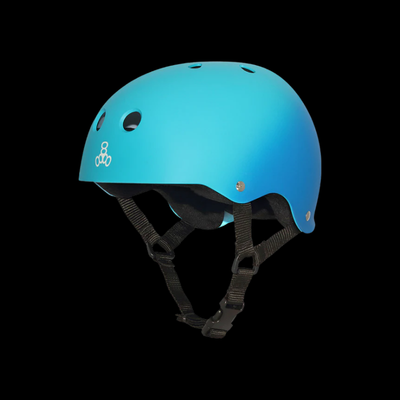
Regardless of which board you pick, wearing proper safety gear is essential when learning. Concrete is unforgiving whether you are practicing kickflips or cruising down a boardwalk.
Wearing a fitted helmet, wrist guards, knee pads, and elbow pads protects against common falls and builds confidence on the board. Make sure to gear up before your first session!
